Which drone suits you, and which doesn't
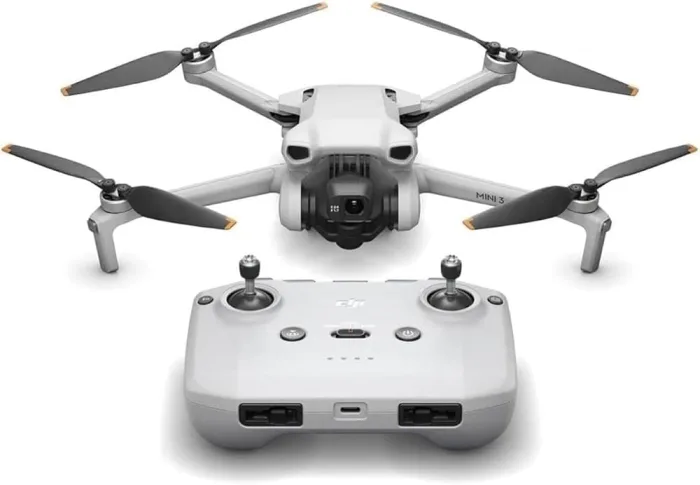
A drone is a brilliant tool for a very specific job: getting a camera into the air for photos and video, or simply learning the genuinely satisfying skill of flying. The market splits cleanly by intent. If your goal is good aerial footage, you want a gimbal-equipped 4K camera drone, and the DJI Mini 4 Pro or DJI Mini 3 are the obvious choices. If your goal is mainly to learn, have fun, or buy for a younger pilot, a cheap and rugged drone like the Ryze Tello makes far more sense than risking a crash on an expensive machine.
It is worth being honest about who a drone is not for, too. If you imagine flying freely over a city or a crowd, the rules will frustrate you fast: you must keep the drone in sight, stay below 120 m, keep clear of airports and never fly over crowds. And if you only want one or two shots of your own garden, a £700 drone is a lot of money and admin for the result. For most people, though, the right drone is one of the six here, matched to whether you mainly want to film or mainly want to fly.
The single most important number: weight and the 250 g line
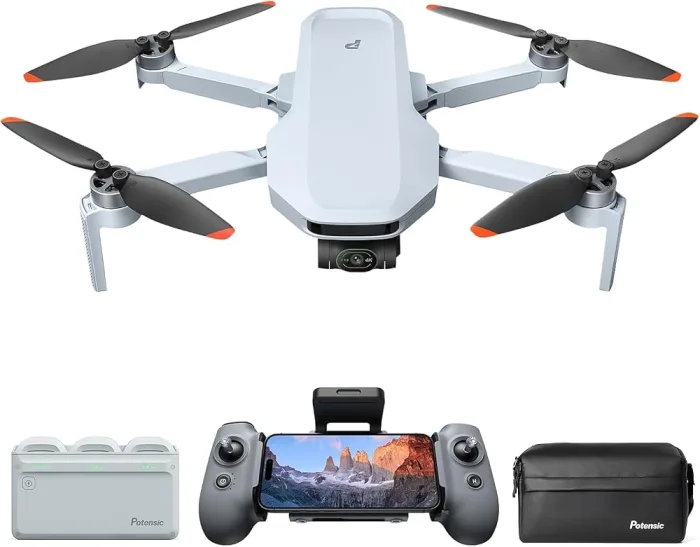
More than the camera or the brand, the figure that shapes your whole experience is the drone's weight, because UK rules pivot on the 250 g threshold. A drone under 250 g, like the DJI Mini 3, DJI Mini 4 Pro, Potensic ATOM or Ryze Tello, sits in the lightest category. You still need a free operator ID from the Civil Aviation Authority for any drone with a camera, but you do not have to pass the flyer test, and you may fly closer to uninvolved people in the Open A1 category.
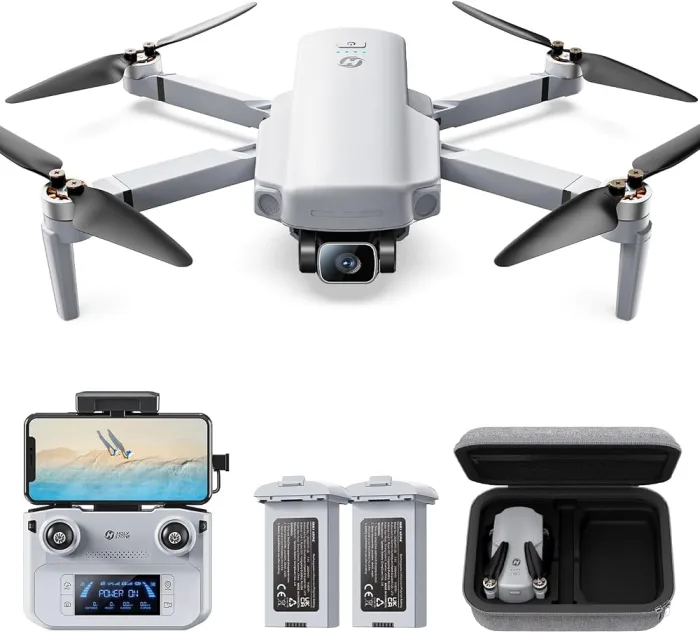
Cross the 250 g line and the rules step up. The DJI Air 3 at 720 g and the Holy Stone HS720E at around 495 g both need a flyer ID as well as an operator ID, which means passing a short, free online theory test, and you must keep greater distance from people. None of this is difficult or expensive, but it is the difference between buying a drone and flying it the same afternoon, or sitting an exam first. We lay out every requirement plainly in our guide to UK drone laws, and it is genuinely worth reading before you spend a penny.
Camera quality: where the money really goes
If footage is your reason for buying, the camera is where you should focus, and the honest truth is that two drones with the same "4K" badge can produce wildly different results. The two factors that matter most are the sensor size and how the camera is stabilised. A larger sensor, such as the 1/1.3 inch unit shared by the DJI Mini 3 and Mini 4 Pro, gathers more light and holds detail far better than the tiny sensors in cheap drones. Just as important is a mechanical gimbal, which physically holds the camera steady rather than smoothing the footage in software.
That gimbal distinction is the clearest dividing line in this group. The DJI Minis, the DJI Air 3 and the Potensic ATOM all use proper 3-axis mechanical gimbals, and their footage looks smooth and professional. The Holy Stone HS720E relies on electronic stabilisation, which crops the image to steady it and gives noticeably softer results, while the Ryze Tello has no stabilisation and only 720p. For serious video our pick is the DJI Mini 4 Pro, and we rank the options in full in our guide to the best camera drone.
Flight time: what the numbers really mean
Quoted flight times are best-case figures measured in still air at a steady cruise, so treat them as a ceiling rather than a promise. In real flying, with wind, cold and the constant small corrections of filming, expect to lose a fair chunk. The longest fliers here are the DJI Air 3 at around 46 minutes and the DJI Mini 3 at up to roughly 38 minutes, while the Ryze Tello manages only about 13. The practical answer for any serious pilot is to buy at least one spare battery: a single battery means one short flight and a long wait, which is why DJI's Fly More bundles and the two-battery Holy Stone kit are worth the extra. We cover battery strategy in our buying guide.
How we chose these six
We deliberately picked drones that cover the full range of real UK needs rather than six near-identical machines. There is a true learner's drone, two sub-250 g all-rounders at different price points, a budget GPS option, a non-DJI alternative for the cost-conscious, and a premium dual-camera flier for those who want the best image quality. Every model here is genuinely available in the UK and earns its spot for a specific buyer, with no padding. If you start by deciding whether you mainly want to film or mainly want to fly, and then check the weight rules, you will find your drone on this list. Our full buying guide covers the rest, and beginners should read our pick of the best drone for beginners.