Best camera drone: what actually makes the footage good

If footage is your reason for buying a drone, the camera is where you should focus, and the "4K" badge tells you surprisingly little. This guide explains what actually makes drone footage look good, and which of our tested drones delivers the best results.

Transparency: This article contains affiliate links. If you buy through one of them, we may earn a commission, at no extra cost to you. That is how we fund our testing and keep this site independent. More about how we test.

Contents

Our selection

Model Price CameraWeightFlight time Rating Link
DJI Mini 4 Pro Camera Drone ★ Top pick DJI Mini 4 Pro Camera Drone £689.00 4K/60fps HDR, 1/1.3" sensorUnder 250 g (no registration to fly)~34 min (up to ~45 min Plus battery) ★ 4.7 View →
DJI Air 3 Dual-Camera Drone DJI Air 3 Dual-Camera Drone £959.00 Dual 4K/60fps (wide + 3x medium tele)720 g (flyer registration required)~46 min ★ 4.6 View →
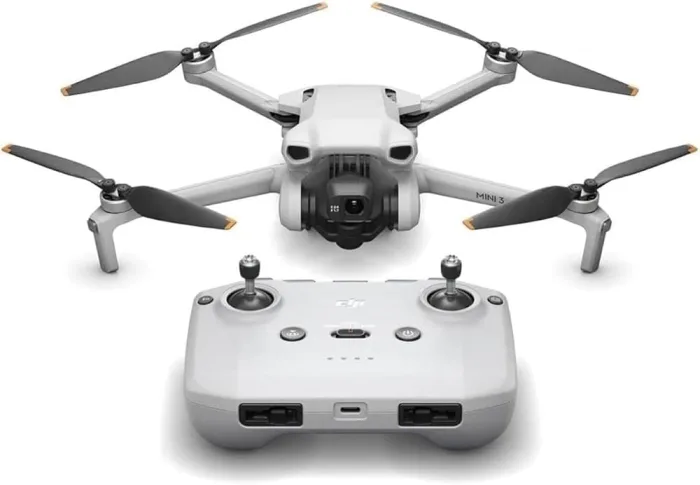
DJI Mini 3 Camera Drone DJI Mini 3 Camera Drone £439.00 4K/30fps, 1/1.3" sensorUnder 250 g (no registration to fly)~38 min (up to ~51 min Plus battery) ★ 4.5 View →
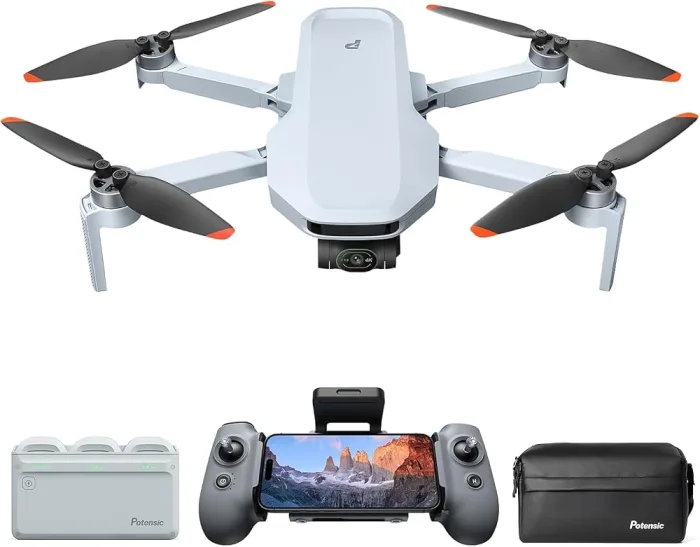
Potensic ATOM 4K GPS Mini Drone Potensic ATOM 4K GPS Mini Drone £259.00 4K, 3-axis mechanical gimbalUnder 250 g (no registration to fly)~32 min ★ 4.3 View →
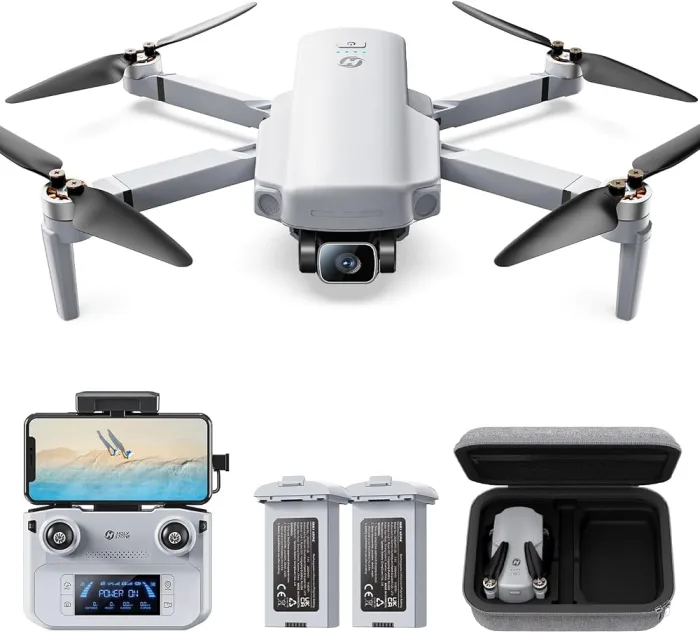
Holy Stone HS720E 4K Drone with GPS Holy Stone HS720E 4K Drone with GPS £199.00 4K with electronic image stabilisation (EIS)495 g (flyer registration required)~23 min per battery (two included) ★ 4.1 View →
Ryze Tello Mini Drone (powered by DJI) Ryze Tello Mini Drone (powered by DJI) £99.00 720p HD (5 MP photos)About 80 g (under 250 g, no registration)~13 min ★ 4.2 View →
★ Top pick
DJI Mini 4 Pro Camera Drone £689.00
Camera : 4K/60fps HDR, 1/1.3" sensorWeight : Under 250 g (no registration to fly)Flight time : ~34 min (up to ~45 min Plus battery) ★ 4.7/5
View on Amazon →
DJI Air 3 Dual-Camera Drone £959.00
Camera : Dual 4K/60fps (wide + 3x medium tele)Weight : 720 g (flyer registration required)Flight time : ~46 min ★ 4.6/5
View on Amazon →
DJI Mini 3 Camera Drone £439.00
Camera : 4K/30fps, 1/1.3" sensorWeight : Under 250 g (no registration to fly)Flight time : ~38 min (up to ~51 min Plus battery) ★ 4.5/5
View on Amazon →
Potensic ATOM 4K GPS Mini Drone £259.00
Camera : 4K, 3-axis mechanical gimbalWeight : Under 250 g (no registration to fly)Flight time : ~32 min ★ 4.3/5
View on Amazon →
Holy Stone HS720E 4K Drone with GPS £199.00
Camera : 4K with electronic image stabilisation (EIS)Weight : 495 g (flyer registration required)Flight time : ~23 min per battery (two included) ★ 4.1/5
View on Amazon →
Ryze Tello Mini Drone (powered by DJI) £99.00
Camera : 720p HD (5 MP photos)Weight : About 80 g (under 250 g, no registration)Flight time : ~13 min ★ 4.2/5
View on Amazon →
BEST OVERALL
DJI Mini 4 Pro Camera Drone - drone DJI

DJI Mini 4 Pro Camera Drone

4.7/5

£689.00

4K/60fps HDR, 1/1.3" sensor · Under 250 g (no registration to fly) · ~34 min (up to ~45 min Plus battery)

  • Stays under the 250 g registration threshold
  • Excellent 4K HDR camera for the size
  • Full omnidirectional obstacle avoidance
  • Long flight time and strong range
  • Premium price for a sub-250 g drone
  • You will want a Fly More bundle for spare batteries
Camera 5/5
Flight time 4/5
Ease of flight 5/5
View on Amazon →
PREMIUM PICK
DJI Air 3 Dual-Camera Drone - drone DJI

DJI Air 3 Dual-Camera Drone

4.6/5

£959.00

Dual 4K/60fps (wide + 3x medium tele) · 720 g (flyer registration required) · ~46 min

  • Two cameras give real framing flexibility
  • Outstanding ~46 minute flight time
  • Larger sensor copes better in low light
  • Very stable in stronger wind
  • Over 250 g, so you must register as an operator and pilot
  • Bigger and heavier to carry
Camera 5/5
Flight time 5/5
Ease of flight 4/5
View on Amazon →
BEST VALUE
DJI Mini 3 Camera Drone - drone DJI

DJI Mini 3 Camera Drone

4.5/5

£439.00

4K/30fps, 1/1.3" sensor · Under 250 g (no registration to fly) · ~38 min (up to ~51 min Plus battery)

  • Same sensor size as the Mini 4 Pro for less money
  • Stays under 250 g
  • Very long flight time
  • True vertical video for social clips
  • No obstacle avoidance, so it asks for more care
  • 4K is capped at 30fps
Camera 4/5
Flight time 5/5
Ease of flight 4/5
View on Amazon →
BEST SUB-250G ALTERNATIVE
Potensic ATOM 4K GPS Mini Drone - drone Potensic

Potensic ATOM 4K GPS Mini Drone

4.3/5

£259.00

4K, 3-axis mechanical gimbal · Under 250 g (no registration to fly) · ~32 min

  • Proper 3-axis mechanical gimbal at this price
  • Stays under 250 g
  • GPS return-to-home for peace of mind
  • Strong value against the DJI Minis
  • Image quality not quite DJI level
  • Transmission range shorter than DJI
Camera 4/5
Flight time 4/5
Ease of flight 4/5
View on Amazon →
BEST BUDGET
Holy Stone HS720E 4K Drone with GPS - drone Holy Stone

Holy Stone HS720E 4K Drone with GPS

4.1/5

£199.00

4K with electronic image stabilisation (EIS) · 495 g (flyer registration required) · ~23 min per battery (two included)

  • Two batteries in the box for ~46 minutes total
  • GPS return-to-home and follow-me modes
  • Keenest price for a 4K GPS drone
  • A forgiving, easy first GPS drone
  • Over 250 g, so registration is required
  • EIS only — no mechanical gimbal, so footage is less smooth
Camera 3/5
Flight time 4/5
Ease of flight 4/5
View on Amazon →
BEST FOR BEGINNERS
Ryze Tello Mini Drone (powered by DJI) - drone Ryze

Ryze Tello Mini Drone (powered by DJI)

4.2/5

£99.00

720p HD (5 MP photos) · About 80 g (under 250 g, no registration) · ~13 min

  • Very cheap, near-toy price
  • Genuinely easy and safe to learn on
  • Tello flight skills carry over to bigger drones
  • Light enough for indoor practice
  • Only 720p — not for serious footage
  • Short ~13 minute flights and limited range
Camera 2/5
Flight time 2/5
Ease of flight 5/5
View on Amazon →

Why resolution alone is not enough

It is tempting to shop on the headline number, but two drones that both record 4K can produce wildly different footage. Resolution only describes how many pixels the camera captures; it says nothing about how clean, smooth or detailed those pixels are. A 4K clip from a cheap drone with a tiny sensor and electronic stabilisation will look softer and shakier than a 4K clip from a drone with a large sensor and a mechanical gimbal. So treat 4K as a baseline to expect, not a measure of quality.

The two factors that genuinely determine how good your footage looks are stabilisation and sensor size. Get those right and you get smooth, detailed, professional-looking results; get them wrong and the resolution number cannot save you. Everything below comes back to these two things.

Why the mechanical gimbal matters most

The single biggest factor in how professional your footage looks is the type of stabilisation. A 3-axis mechanical gimbal physically holds the camera level and steady as the drone moves, tilts and corrects for wind, so the video is smooth without sacrificing any of the frame. Electronic image stabilisation (EIS), by contrast, steadies footage in software by cropping into the image, which costs you sharpness and field of view and never looks quite as fluid.

In our comparison this is the clearest dividing line. The DJI Mini 4 Pro, DJI Mini 3, DJI Air 3 and Potensic ATOM all use mechanical gimbals, and their footage looks the part. The Holy Stone HS720E relies on EIS and is visibly a step behind in motion, while the Ryze Tello has no stabilisation and only 720p. If smooth video matters, insist on a mechanical gimbal before anything else.

Sensor size and low light

After the gimbal, sensor size is the next most important thing. A larger sensor gathers more light, which means more detail, better dynamic range and cleaner footage as the light fades, exactly the conditions where cheap drones fall apart. The DJI Mini 3 and DJI Mini 4 Pro share a generous 1/1.3 inch sensor, which is excellent for drones of their size and a big part of why their image quality is so strong. The DJI Air 3 goes further still and adds a second telephoto camera for creative framing.

Cheaper drones typically use much smaller sensors, which is why their footage can look thin and noisy, particularly in anything other than bright daylight. When you compare two drones, look past the megapixels to the sensor dimensions and the stabilisation, because together those tell you far more about the footage you will actually get.

Frequently asked questions

Q
What camera resolution do I need on a drone?

Genuine 4K is the standard to aim for, and all of our top camera drones record it. More important than the resolution number, though, is whether the footage is stabilised by a mechanical gimbal and how large the sensor is. A 4K drone with a small sensor and electronic stabilisation will look worse than a 4K drone with a 1/1.3 inch sensor and a 3-axis gimbal.

Q
Why does a mechanical gimbal matter so much?

A mechanical gimbal physically holds the camera level and steady as the drone moves, so the video is smooth without cropping the frame. Electronic stabilisation, by contrast, smooths footage in software at the cost of sharpness and field of view. For anything beyond casual clips, a mechanical gimbal is the single biggest factor in how professional your footage looks.

Q
Which is the best camera drone right now?

For most people the DJI Mini 4 Pro is the best camera drone, combining a 1/1.3 inch sensor, 4K/60fps HDR and a mechanical gimbal in a sub-250 g body. If you want the ultimate image quality and a second telephoto lens, the heavier DJI Air 3 is a step up. Both far outclass electronically stabilised budget drones on video quality.

Our advice on camera drones

For most people the best camera drone is the DJI Mini 4 Pro: it combines a large 1/1.3 inch sensor, a mechanical gimbal and 4K/60fps HDR in a sub-250 g body, so you get superb footage with the simplest rules. If you want most of that quality for less, the DJI Mini 3 shares the same sensor and is our value pick, and the Potensic ATOM brings a mechanical gimbal at the budget end. For the ultimate image quality, a second telephoto lens and the longest flights, the heavier DJI Air 3 is the step up. Whatever you choose, prioritise a mechanical gimbal and a larger sensor over the headline resolution, and you will be happy with the footage. See the full picture in our buying guide.