What makes a drone beginner-friendly
A good beginner drone is easy to fly and easy to forgive. The most important feature is GPS position-holding: a drone that hovers steadily on its own will not drift away the instant you ease off the sticks, which removes most of the early panic. Close behind is return-to-home, which automatically flies the drone back to its launch point if you lose orientation or the signal drops. Obstacle avoidance, where available, adds a further safety net near trees and walls.
Just as important is how much a crash costs. Beginners do crash, and there is a world of difference between bumping a £100 Ryze Tello into a hedge and doing the same to a £900 drone. For pure learning, a cheap, light, robust drone is often the wiser first buy precisely because mistakes are cheap. Simple controls, a clear app and a steady hover round out what makes a drone friendly to start on.
Cheap drone or DJI? It depends on your goal
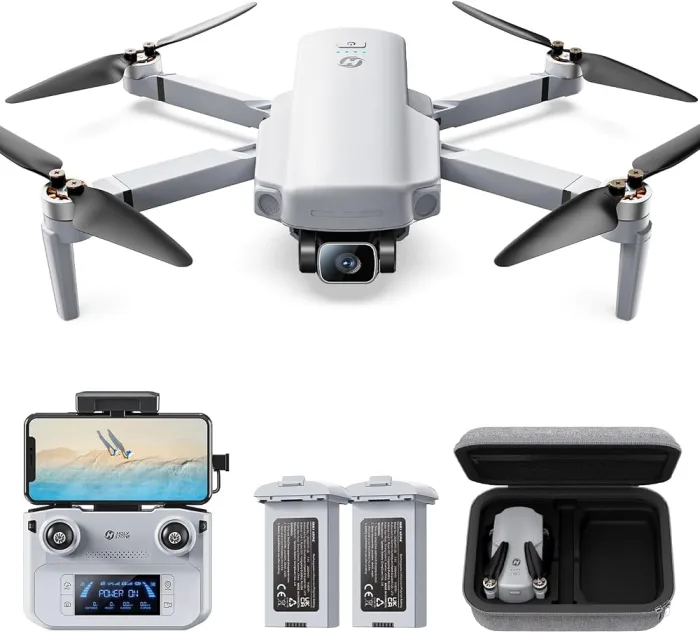
The right beginner drone splits cleanly by what you want. If your aim is mainly to learn the skill of flying, or you are buying for a child, start cheap. The Ryze Tello is our top pick here: built with DJI flight tech, it hovers beautifully, survives knocks and is light enough to fly indoors, all for around £100. The Holy Stone HS720E is a step up that adds proper GPS and a 4K camera on a budget, with two batteries for real flying time.
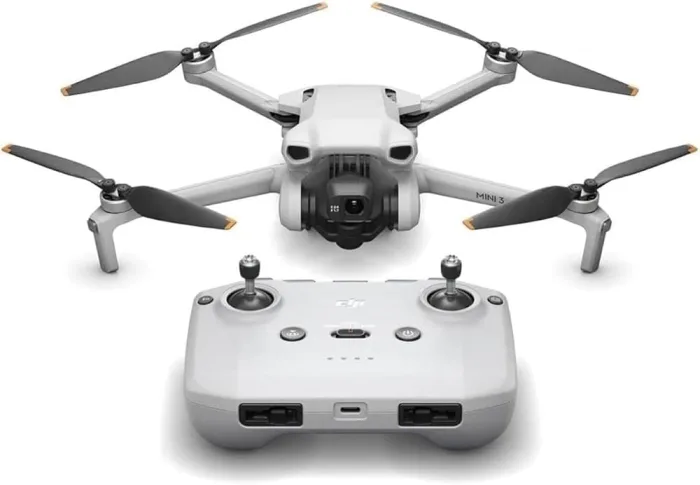
If, on the other hand, you already know you want good photos and video, it can be smarter to begin with a capable sub-250 g drone rather than buy a toy and quickly outgrow it. The DJI Mini 3 is genuinely beginner-friendly thanks to its GPS and steady handling, and the DJI Mini 4 Pro adds full obstacle avoidance, which is reassuring for a nervous first-timer flying near obstacles. You pay more, but you get a drone you will not need to replace as your skills grow.
Your first flight: what to expect
Flying a modern GPS drone for the first time is less daunting than most people fear. Because the drone largely holds its own position, your job is mainly to make smooth, gentle inputs and to keep track of which way it is facing, which is the skill that trips up beginners most. Start in a large, open space well away from people, trees and buildings, or indoors with a light drone like the Tello, and keep your first flights short and low while you build a feel for the controls.
Before you fly outdoors at all, sort the legal basics: nearly every camera drone needs a free operator ID, and a drone of 250 g or more also needs a flyer ID from a short online test. It takes minutes and keeps you on the right side of the law. Our UK drone laws guide explains exactly what you need, and it is worth reading before that very first flight.
Our advice for beginners
If you mainly want to learn to fly, or you are buying for a child, the Ryze Tello is the best and safest place to start, with the Holy Stone HS720E as a budget step up that adds GPS and a 4K camera. If you already know you want good footage, begin with the beginner-friendly DJI Mini 3, or the DJI Mini 4 Pro if you want obstacle avoidance for extra confidence. Whatever you choose, prioritise GPS and return-to-home, start in open space, keep early flights short, and sort your registration first. Do that and your first drone will build skills you can carry to any model. For the full picture, read our main buying guide.