Potensic ATOM review: the best sub-250 g alternative to DJI

The Potensic ATOM is the drone that proves DJI is not the only option under 250 g. A genuine 3-axis mechanical gimbal, GPS return-to-home and a sub-250 g weight, for less than a DJI Mini. Here is how close it gets, and where DJI still leads.

Transparency: This article contains affiliate links. If you buy through one of them, we may earn a commission, at no extra cost to you. That is how we fund our testing and keep this site independent. More about how we test.

Contents

For years the advice for a serious sub-250 g drone was simply "buy a DJI". The Potensic ATOM is the most convincing reason to question that. It targets exactly the same sweet spot, light enough to skip the flyer test, with a proper mechanical gimbal for smooth footage, but undercuts the DJI Minis on price. It cannot quite match DJI on every measure, but it gets close enough to be a genuine alternative, and that makes it our best non-DJI pick.

Specifications

Model Price CameraWeightFlight time Rating Link
Potensic ATOM 4K GPS Mini Drone ★ Top pick Potensic ATOM 4K GPS Mini Drone £259.00 4K, 3-axis mechanical gimbalUnder 250 g (no registration to fly)~32 min ★ 4.3 View →
★ Top pick
Potensic ATOM 4K GPS Mini Drone £259.00
Camera : 4K, 3-axis mechanical gimbalWeight : Under 250 g (no registration to fly)Flight time : ~32 min ★ 4.3/5
View on Amazon →

Our in-depth review

BEST SUB-250G ALTERNATIVE
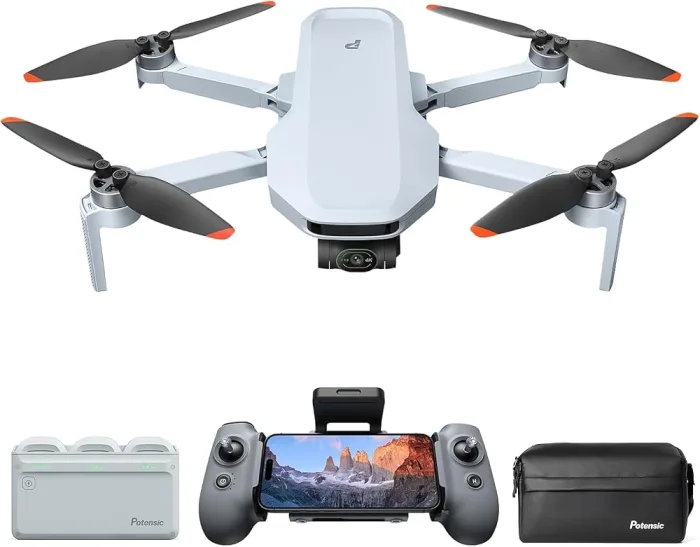
Potensic ATOM 4K GPS Mini Drone - drone Potensic

Potensic ATOM 4K GPS Mini Drone

4.3/5

£259.00

4K, 3-axis mechanical gimbal · Under 250 g (no registration to fly) · ~32 min

  • Proper 3-axis mechanical gimbal at this price
  • Stays under 250 g
  • GPS return-to-home for peace of mind
  • Strong value against the DJI Minis
  • Image quality not quite DJI level
  • Transmission range shorter than DJI
Camera 4/5
Flight time 4/5
Ease of flight 4/5
View on Amazon →

The verdict from Henry Watts, drone tester and licensed pilot

The best non-DJI sub-250 g drone. The Potensic ATOM is the standout alternative if you want to stay under 250 g but spend less than a DJI Mini. A genuine 3-axis mechanical gimbal — rare at this price — keeps the 4K footage smooth, and GPS return-to-home guards against fly-aways. It cannot quite match DJI on outright image quality or range, but it gives you a lot of capable drone for the money.

The mechanical gimbal makes the footage feel a class above what the price suggests.

Who is the Potensic ATOM for?

The ATOM is for the buyer who wants the sub-250 g advantages and smooth, gimbal-stabilised footage, but does not want to pay DJI prices. If your budget sits below a DJI Mini 3 and you are willing to accept slightly shorter transmission range and a touch less outright image quality, it gives you a remarkable amount of capable drone for the money. It is a strong first proper camera drone for someone stepping up from a toy.

It is less suited to the pilot who wants the very best image quality, the longest range or the most polished software, where DJI still holds an edge. And as with any camera drone, anyone who only wants to learn the basics would be better off with a cheaper, more disposable drone like the Ryze Tello before investing here.

How the Potensic ATOM performs

The mechanical gimbal

The headline feature, and the reason the ATOM stands out at its price, is its 3-axis mechanical gimbal. Where most drones near this price rely on electronic stabilisation, which crops and softens the image, the ATOM physically stabilises the camera. The result is 4K footage that is genuinely smooth and steady, a clear class above the electronically stabilised Holy Stone HS720E. It is the single biggest reason the ATOM feels more capable than its price suggests.

Camera quality

The 4K footage is good, clean and usable, and for most casual and enthusiast use it is more than enough. Side by side with a DJI Mini, the DJI generally pulls ahead on fine detail and dynamic range, particularly in tricky light, but the gap is smaller than the price difference implies. For social clips, holiday footage and everyday creative work, the ATOM's camera does the job well.

GPS and safety

The ATOM has GPS positioning and return-to-home, so it holds its place steadily and can fly itself back to the launch point if the signal drops or the battery runs low. That is a major reassurance, especially for a newer pilot, and it puts the ATOM on a level with the DJI Minis for basic flight safety. What it lacks is obstacle avoidance, so you still fly with awareness near trees and buildings.

Range and software

This is where DJI's lead shows most. The ATOM's transmission range is shorter than a DJI Mini's, so you cannot push it quite as far, and the app and overall software polish are a step behind DJI Fly. Neither is a deal-breaker for the way most people fly, but if you want to fly at long distances or value the slickest experience, it is worth knowing.

The honest downside: it is not quite a DJI

The ATOM's drawbacks are all matters of degree rather than serious flaws. The image quality is very good but not class-leading, the range is shorter, and the software is less refined than DJI's. If those things matter most to you, the DJI Mini 3 is worth the extra. But if your priority is a sub-250 g drone with a proper mechanical gimbal at the lowest sensible price, the ATOM delivers exactly that, and it does so well enough that the saving feels like genuine value rather than a compromise. As ever, sort your operator ID before flying.
Frequently asked questions

Q
How does the Potensic ATOM compare to the DJI Mini 3?

The ATOM matches the DJI Minis on the things that matter most for beginners: a sub-250 g weight, a 3-axis mechanical gimbal and GPS return-to-home, all for less money. DJI still leads on outright image quality, transmission range and software polish. If budget is the priority and you can accept slightly shorter range, the ATOM is a genuinely strong alternative.

Q
Does the Potensic ATOM have a mechanical gimbal?

Yes, and it is the headline feature at this price. A 3-axis mechanical gimbal physically stabilises the camera rather than relying on cropping and software, so the 4K footage is noticeably smoother than the electronically stabilised video from cheaper drones. It is the main reason the ATOM punches above its price for video.

Q
Do I need to register the Potensic ATOM?

It has a camera, so you need a free operator ID from the CAA. Because it weighs under 250 g you do not need the flyer test or a flyer ID. That keeps the paperwork to a minimum, but you should still read the CAA's current rules so you know where you can and cannot fly.

Verdict on the Potensic ATOM

The Potensic ATOM is our best non-DJI sub-250 g pick because it nails the essentials, the light weight, a true mechanical gimbal and GPS return-to-home, for noticeably less than a DJI Mini. You give up a little on outright image quality, range and software polish, but none of it spoils the experience for everyday flying, and the gimbal in particular lifts it well above cheaper drones. If you want the best image quality and software, step up to the DJI Mini 3; if you are after the keenest budget GPS drone overall, look at the Holy Stone HS720E. For value-focused buyers who still want smooth 4K, the ATOM is the smart pick. See our best drone for beginners guide if you are new to flying.