Weight and the rules: the decision that shapes everything
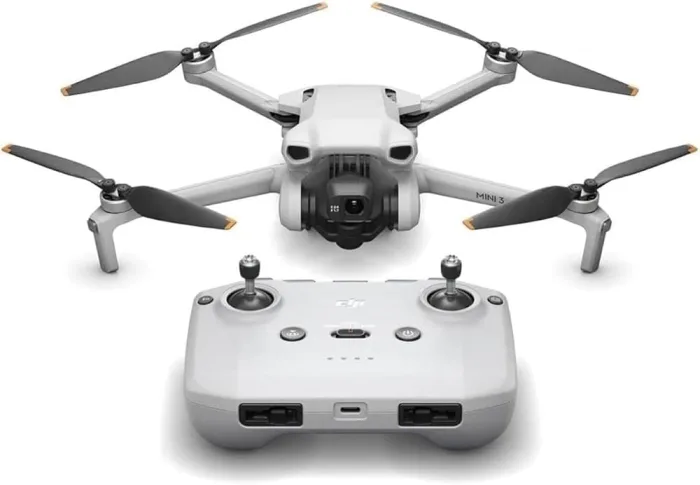
Before camera or brand, the first thing to settle is weight, because in the UK the rules pivot on the 250 g threshold. A drone under 250 g, such as the DJI Mini 4 Pro or DJI Mini 3, sits in the lightest category. You still need a free operator ID from the CAA for any camera drone, but you do not have to pass the flyer test, and you can fly closer to uninvolved people in the Open A1 category.
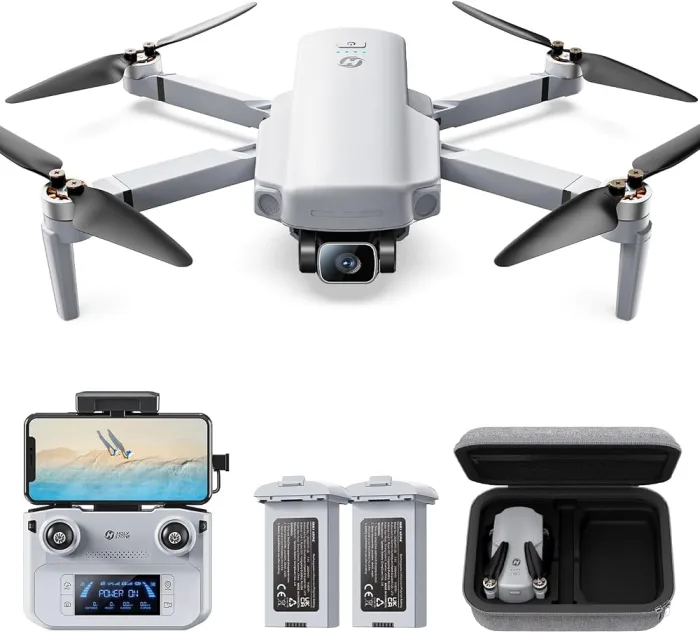
Cross 250 g and the requirements step up. A drone like the DJI Air 3 at 720 g or the Holy Stone HS720E at around 495 g needs a flyer ID as well, which means passing a short, free online test, and you must keep more distance from people. Neither is hard or costly, but it is the difference between flying the same afternoon and sitting an exam first. So decide early: if you value the simplest rules, prioritise a sub-250 g drone. Our full UK drone laws guide sets out every requirement.
Camera quality: what actually makes footage good
If you are buying for the footage, the camera deserves most of your attention, and the key thing to know is that "4K" alone tells you little. Two factors matter far more than the resolution number. The first is sensor size: a larger sensor, like the 1/1.3 inch unit in the DJI Minis, gathers more light and holds detail better, especially in dimmer conditions. The second is stabilisation. A 3-axis mechanical gimbal physically holds the camera steady, giving smooth, professional footage, whereas electronic stabilisation smooths the image in software at the cost of sharpness and field of view.
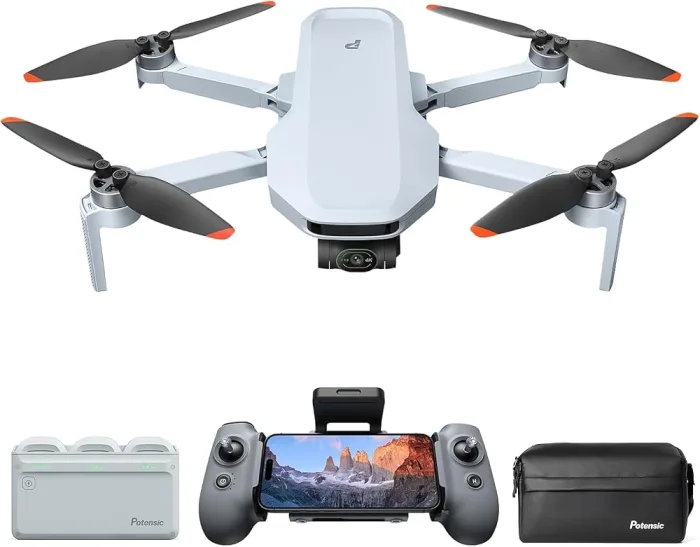
That gimbal distinction is the clearest line in any lineup. The DJI Minis, the DJI Air 3 and the Potensic ATOM all use mechanical gimbals; cheaper drones like the Holy Stone HS720E rely on electronic stabilisation, and the Ryze Tello has none at all. If footage quality matters, prioritise a mechanical gimbal above almost everything else. We rank the options in our best camera drone guide.
Flight time and batteries
Quoted flight times are best-case figures, measured in still air at a gentle cruise, so always expect less in practice once wind, cold and active filming take their toll. The longest fliers here are the DJI Air 3 at around 46 minutes and the DJI Mini 3 at up to roughly 38, while the Ryze Tello manages only about 13. The single most useful upgrade for any serious pilot is a spare battery: one battery means one short flight and a long recharge, which quickly becomes frustrating. That is why DJI's Fly More bundles, which add spare batteries, a charger and a case, are usually worth the extra, and why the two-battery Holy Stone kit is such good value out of the box.
Features worth paying for, and ones you can skip
A few features genuinely matter. GPS positioning and return-to-home are near-essential: they keep the drone steady and bring it back automatically if the signal drops or the battery runs low, which is a real safety net. Obstacle avoidance, as on the DJI Mini 4 Pro and Air 3, is worth paying for if you are new or fly near trees and buildings. A mechanical gimbal, as covered above, is the biggest single factor in footage quality. And a spare battery or a Fly More bundle transforms how much you actually get to fly.
Other things matter less than the marketing suggests. Headline megapixel and resolution numbers are far less important than sensor size and stabilisation. Intelligent flight modes, the automated orbits and follow shots, are fun but rarely a deciding factor. And brand buys you polish, support and resale value, which is worth something, but never put it ahead of getting the weight class, camera and battery right for how you actually fly.